Three Trigger Types
Measurable thresholds, health state and events — you choose which signal a rule watches.
 CLUSTER MANAGER
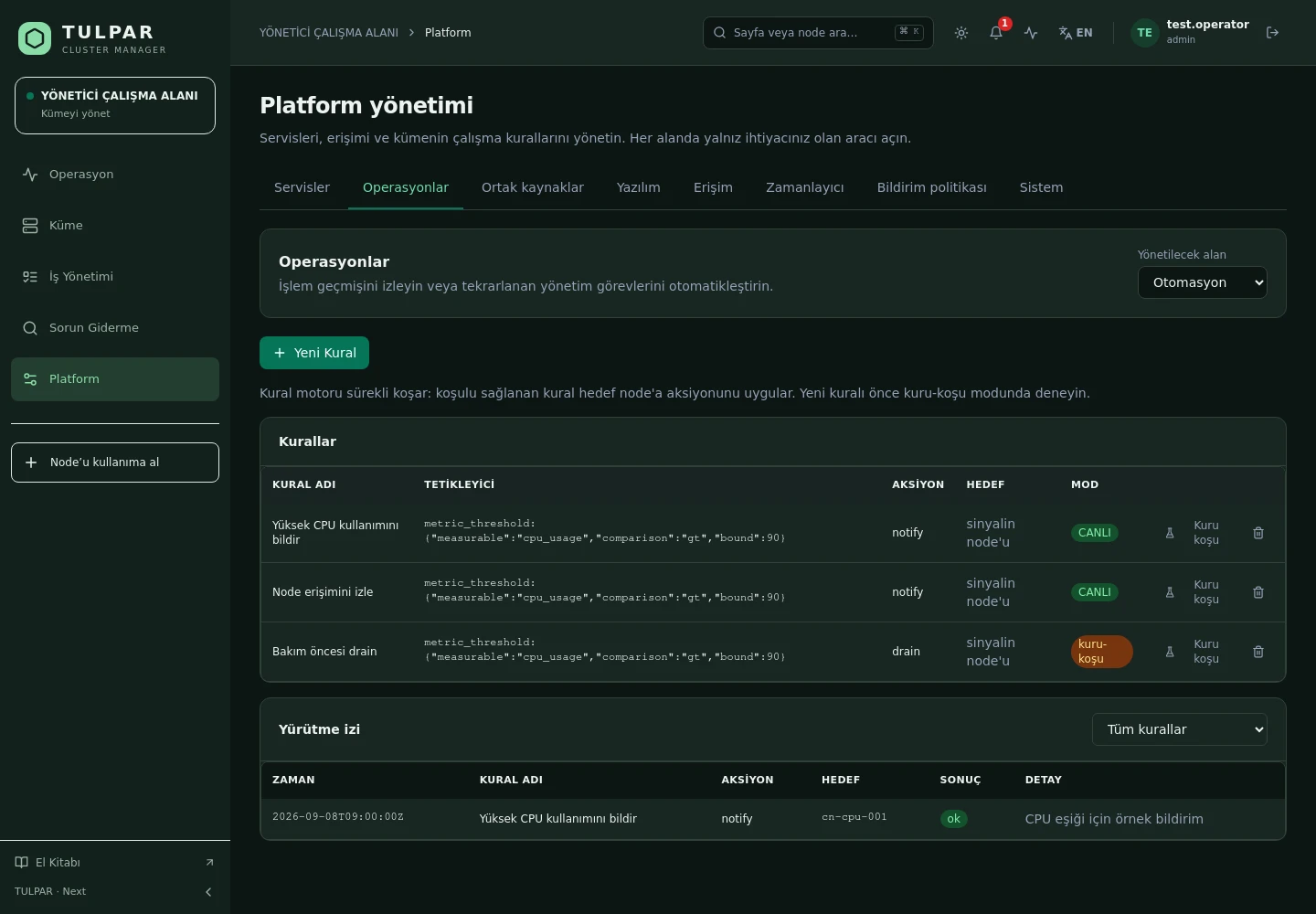
Automation Engine
When a metric threshold or health event fires, drain the node, reboot it, cut its power or send word — through a traceable execution pipeline that passes every safety gate.
Execute a rule with no side effects and see exactly what it would do before it does it.
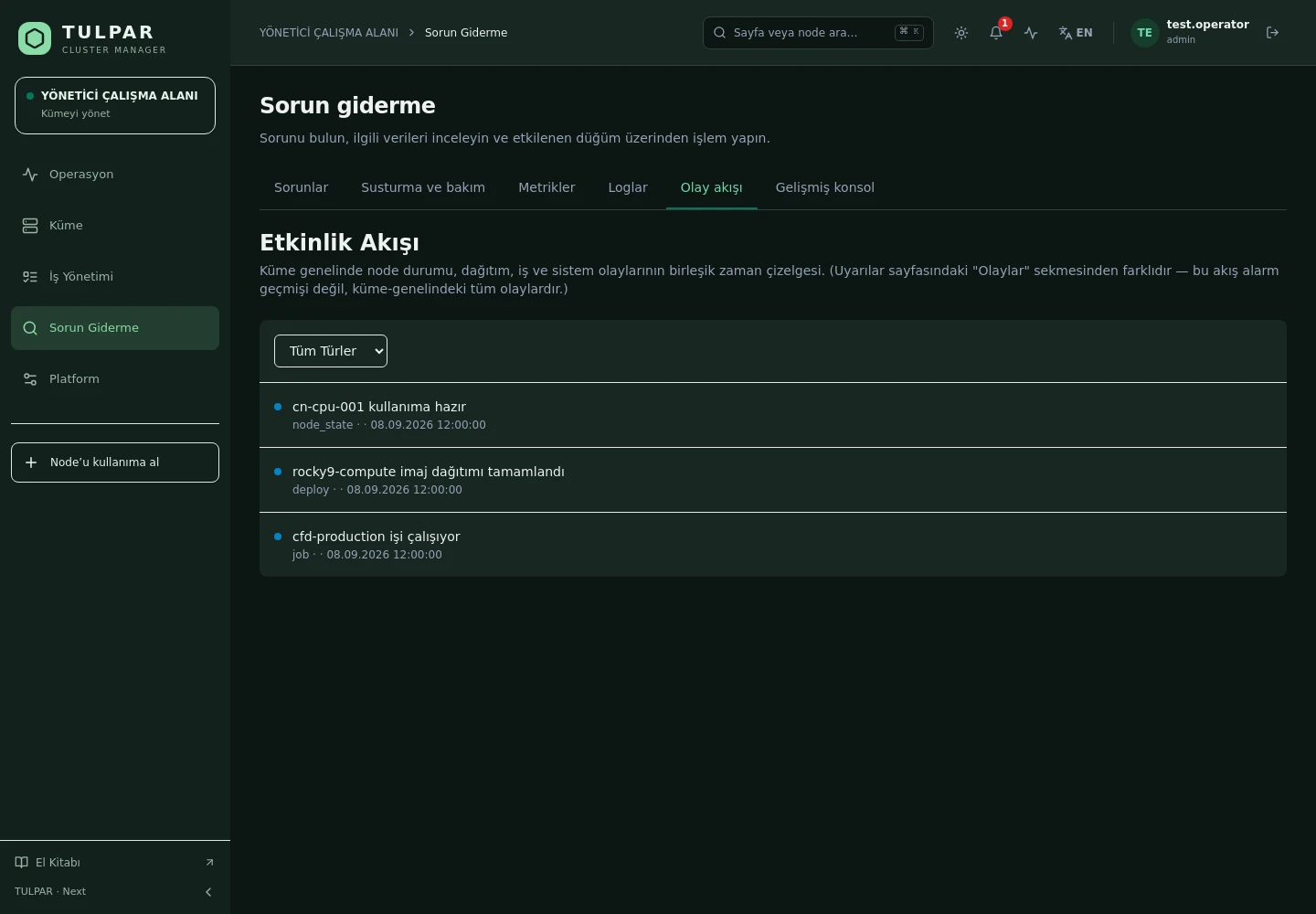
The triggering signal, the chosen action and its result are written to a detailed execution record.
What's Inside
The automation engine isn't a pile of scripts — it's an executor that runs every rule through the same fail-safe pipeline.
Measurable thresholds, health state and events — you choose which signal a rule watches.
Drain, reboot, power off, power cycle, image update, notify and script — the daily reflexes of HPC operations.
Disabled check → approval → rate limit → dry run → real execution; every rule passes these gates in order.
Each run produces an execution record: when, on which signal, with what result — all of it queryable.
Rules apply to node categories rather than single nodes; as the cluster grows, the rule count doesn't.
Node configurations converge declaratively; manual deviations are corrected on the next pass.
TULPAR / Automation Engine
Automation is the most feared thing in a cluster — TULPAR makes it provable first and automatic second.
GOOD TO KNOW
Got questions? Everything you need to know about installation, licensing and scaling is here.
tulpar-preflight.sh prepares the prerequisites, install.sh brings up the whole stack; you then enter the admin password, NTP, LDAP and SLURM settings in the web wizard. A typical installation completes in minutes.docker load. Every component works on a closed network, including node installation, monitoring and central logging.READY FOR YOUR NEXT COMPUTATION
Let’s explore what TULPAR can do for your cluster.
Request a demo